A Midsummer Spectacle: Native Rhododendron Along the Great Allegheny Passage
Around the Fourth of July, one of western Pennsylvania’s most striking wildflower displays unfolds along the Great Allegheny Passage. Along much of the GAP, Rhododendron maximum – the great rhododendron, or rosebay rhododendron opens with a spectacular display. The robust shrub with leathery leaves has pale pink to white flowers, marked with olive-gold spotting. They…
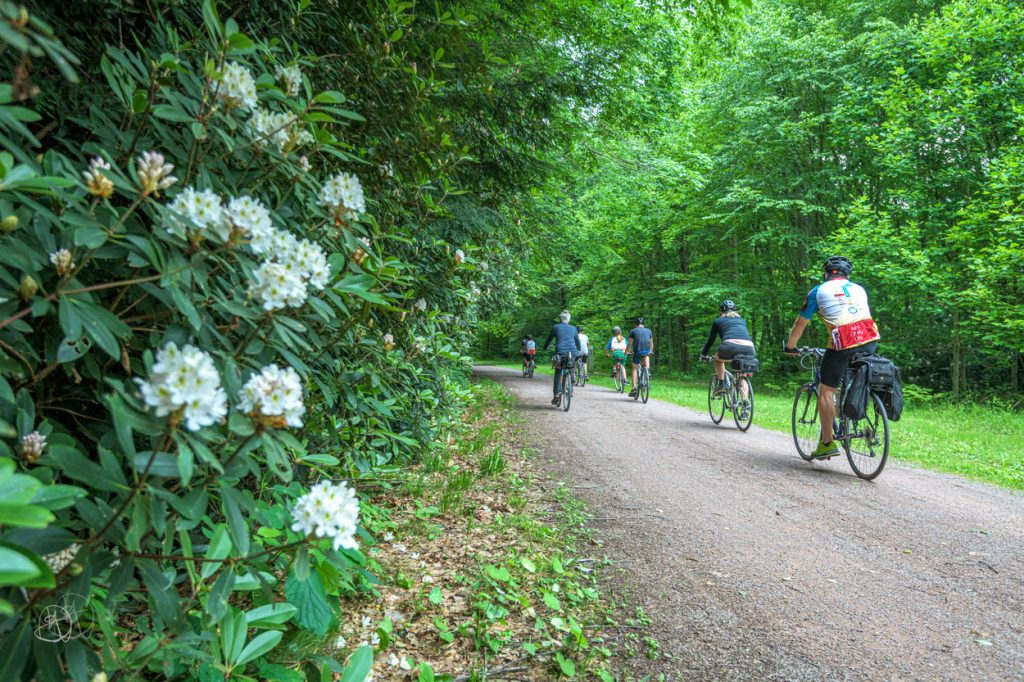
Around the Fourth of July, one of western Pennsylvania’s most striking wildflower displays unfolds along the Great Allegheny Passage.
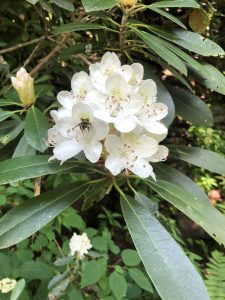 Along much of the GAP, Rhododendron maximum – the great rhododendron, or rosebay rhododendron opens with a spectacular display. The robust shrub with leathery leaves has pale pink to white flowers, marked with olive-gold spotting. They open in dense clusters from mid-June into mid-July, often peaking around Independence Day.
Particularly large colonies are found just beyond Rockwood, PA, around Mile Marker 40, and just outside of Ohiopyle, riding toward Confluence. Many parts of the GAP are especially well suited to R. maximum because the Casselman and Youghiogheny river corridors create the cool, moist, acidic conditions the plant prefers. Along stream banks, in hemlock hollows, and on north-facing slopes, the shrubs can grow 15 feet tall or more, forming dense, cathedral-like canopies that filter the summer light across the trail.
Beyond its beauty, R. maximum plays an important ecological role, providing winter cover for deer and small mammals, as well as nectar for native bumblebees and sphinx moths. For walkers and cyclists, mid-June and early July offer the chance to enjoy both the GAP’s gentle rail-trail grade and one of Pennsylvania’s most memorable native bloom events.
PgW – June 2026