The Food Pantry Line Is Growing, and So Is the Backpack List
The Confluence Turkeyfoot Food Pantry served 103 families in September, 96 of them people over 60. Three distributions are left this year, and volunteers are needed.
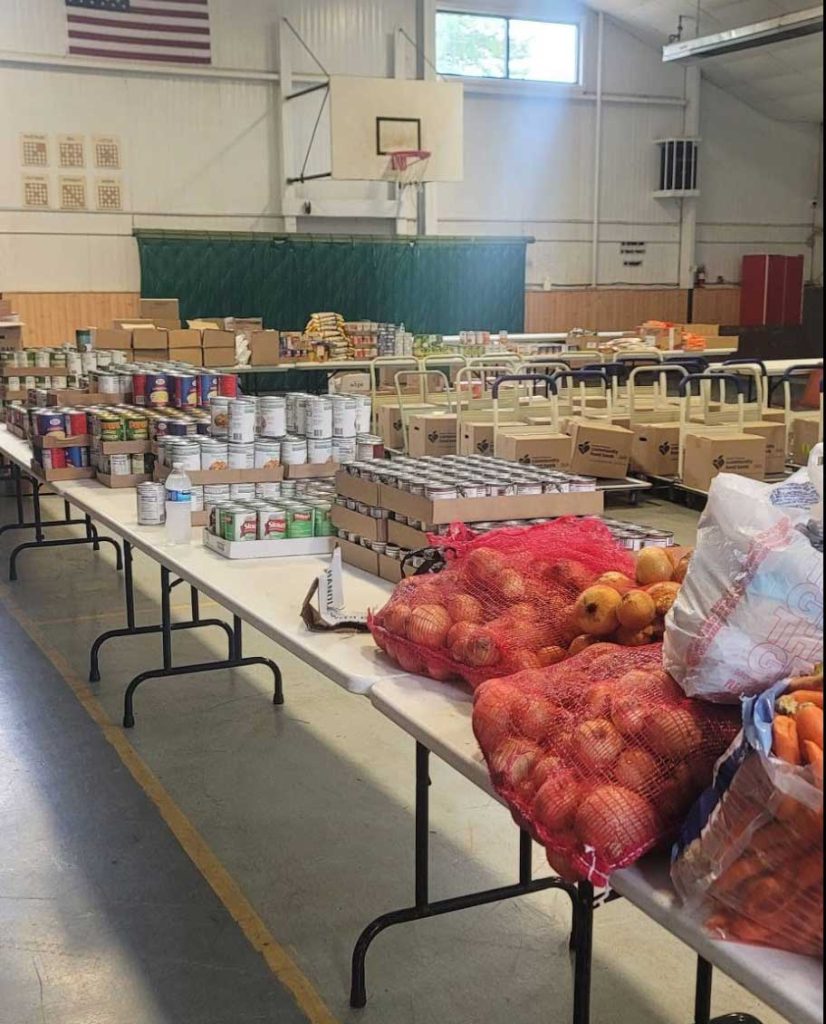
One hundred and three families came through the line at the Confluence Turkeyfoot Food Pantry in September. That is 190 people, and 96 of them were over the age of 60. The pantry says the number of families in need keeps growing each month.
Along with the seniors, the September line included 67 other adults and 27 children.
The pantry runs out of the Community Center at 711 Logan Place. Three distributions are left this year, on Friday, October 9, Friday, November 13, and Friday, December 11. Doors open around 8:45 a.m., though neighbors start lining up well before that.
Behind each of those mornings is a truck. The Greater Pittsburgh Community Food Bank sends it on the Thursday of pantry week, and the pantry does not learn what time it will arrive until late Wednesday evening. Volunteers show up anyway, to unload on Thursday, to work the line on Friday, and in plenty of cases to do both. Anyone who can lift a box or hand out a bag is welcome on those days.
The other half of the operation goes home in a backpack. The Turkeyfoot backpack program had run until 2021 and sat dormant after that. The pantry restarted it in February 2026, and waited until February on purpose: there was not enough money to begin with the 2025 school year, and nobody wanted to start handing food to children in September only to stop in October when the account ran dry.
There is no state or federal money in it. The program runs on private donations, and the food is bought from the Greater Pittsburgh Community Food Bank, the same supplier that fills the pantry. Twice a month during the school year the bags go straight to students. Somerset Trust donated the first run of drawstring bags, and when those wore out or stopped coming back, the pantry bought plastic ones.
Each weekend bag carries three meals a day for two days. Over the spring break, when the school was closed six days, it carried six days of food. Between February and May the program put out roughly 886 meals, delivered to somewhere between 47 and 50 children every two weeks, at a cost of $900 to $1,100 a month. Students in the National Honor Society packed the bags and carried them to the teachers for handout. No one on the program draws a salary, and there is no overhead to speak of.
It started with PreK through sixth grade, where about 65 percent of students were identified as eligible. Of the 79 eligible families, nine declined, 34 never answered, and 36 opted in. It was extended to the high school after that, and more families signed up as the spring went along. This school year the elementary enrollment is 112 in kindergarten through sixth grade, and 81 of those students, 72 percent, have been identified as eligible.
Kris Mamula reported in April that Ben Tawney, who runs the Somerset County Mobile Food Bank near Bakersville, has a simple way of predicting hunger in this county. “When you see fuel prices go up, you’ll see food prices go up and more people struggle,” Tawney said then, when gasoline had climbed from about $3 a gallon to about $4.20 after the war with Iran began.
Five months later the test is holding. Heating oil is $5.70 a gallon, up 28 percent since August. Grocery prices are running about a third above 2019. The Foodmart closed in April and has not reopened, so a box of pantry food now saves a trip down the mountain on top of everything else it does.
A word about a number going around. A post circulating this week claims one in three Americans go hungry and that 37 percent have gone to sleep hungry, crediting Feeding America and the USDA. Neither organization published that figure. It comes from a consumer study called The Secret Financial Lives of Americans, released in August 2018 by a Brooklyn research firm, and it asked people whether they had ever gone to sleep hungry over money, not whether they did last night or last year.
The real numbers are bad enough without the help. The USDA counted 13.7 percent of American households as food insecure in 2024, which is 18.3 million households and 47.9 million people, 5.4 percent of them in the category the department calls very low food security. A Federal Reserve Bank of New York survey in February found 10 percent of households reported not having enough food or having children miss meals, more than double the 4 percent measured in June 2020, and more than a third said they had dipped into savings to buy groceries.
The stopgap spending law signed September 2 keeps SNAP, WIC and the commodity program that fills those pantry boxes running at current levels through December 11. That is the same day as the pantry’s last distribution of the year, which is either a coincidence or the kind of timing that makes a person want to plan ahead.
Anyone who wants to help can turn up at the Community Center on one of those mornings. Anyone who needs a box should come too. Same line, same door, and nobody standing in it is a statistic.