Don’t Blame the Goldenrod
Every September, your eyes itch, your nose runs, and you glance at that roadside along Sugarloaf Road blazing with yellow and declare, “There it is. The culprit!” It’s an understandable mistake, and an unfair one. The real offenders are growing nearby, unnoticed and unadorned. Goldenrod is impossible to miss. Pennsylvania has 28 species. Its…
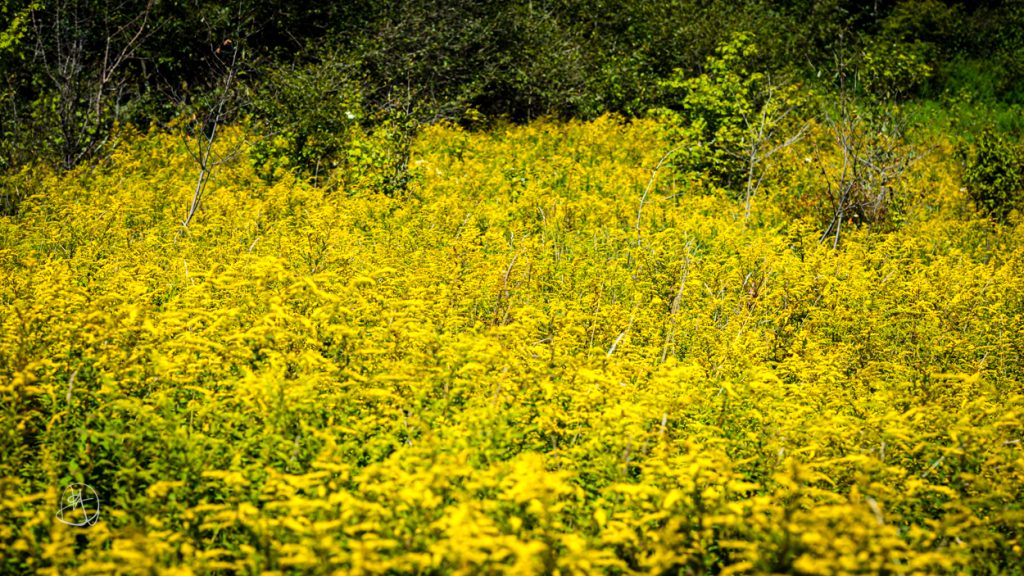
Every September, your eyes itch, your nose runs, and you glance at that roadside along Sugarloaf Road blazing with yellow and declare, “There it is. The culprit!” It’s an understandable mistake, and an unfair one. The real offenders are growing nearby, unnoticed and unadorned.
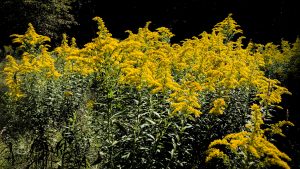
Goldenrod is impossible to miss. Pennsylvania has 28 species. Its golden plumes adorn fields, ditches, and forest edges, and each tiny flower wears bright, showy yellow petals. One woodland species is white. Those petals advertise to insects. Bumblebees, honeybees, wasps, hoverflies, and monarch butterflies crowd the blooms in the last great nectar rush of the year. Goldenrod flowers are actually one of the most critical late-season nectar sources for adult monarchs.
The pollen fits the strategy. It is heavy, sticky, and slightly spiny, built to cling to fuzzy insect bodies. It doesn’t drift on the breeze; it hitchhikes on a bee. Stand beside a blooming patch, and you’ll see pollen on the bees, not in the air. Pollen that heavy rarely reaches your nose.
The real villain is ragweed. It blooms at the same time as goldenrod, from August until the first hard frost, and often grows right beside it, which is why goldenrod takes the blame. But ragweed has no showy petals and no bright colors. Its flowers are tiny, green, and dull.
Ragweed doesn’t need to impress anyone, because it relies on wind, not insects. Its pollen is light, dry, and powdery, and it lifts off at the slightest breeze. A single plant can release up to a billion grains in a season, and that pollen can travel for miles. Wind pollination is a numbers game: skip the petals, make enormous quantities, and let some land where it needs to. Some of it lands in your nose.
Ragweed has help. Mugwort, pigweed, and lamb’s quarters all have small, greenish flowers that shed lightweight pollen in late summer. Grasses, among the most widespread wind-pollinated plants, have no petals. None of these would win a photo contest, which is exactly why they escape suspicion.
So hooray for goldenrods, one of the Allegheny Highlands’ most valuable native plants, feeding pollinators and migrating monarchs as summer fades. So when your eyes water this fall, skip the golden field and look instead at the plain green weeds along the edge. If you need relief, check local pollen counts, keep windows closed on windy mornings, and ask a pharmacist or doctor about treatment. Just don’t blame the goldenrod. It’s busy feeding the bees.
© Paul g. Wiegman 2026