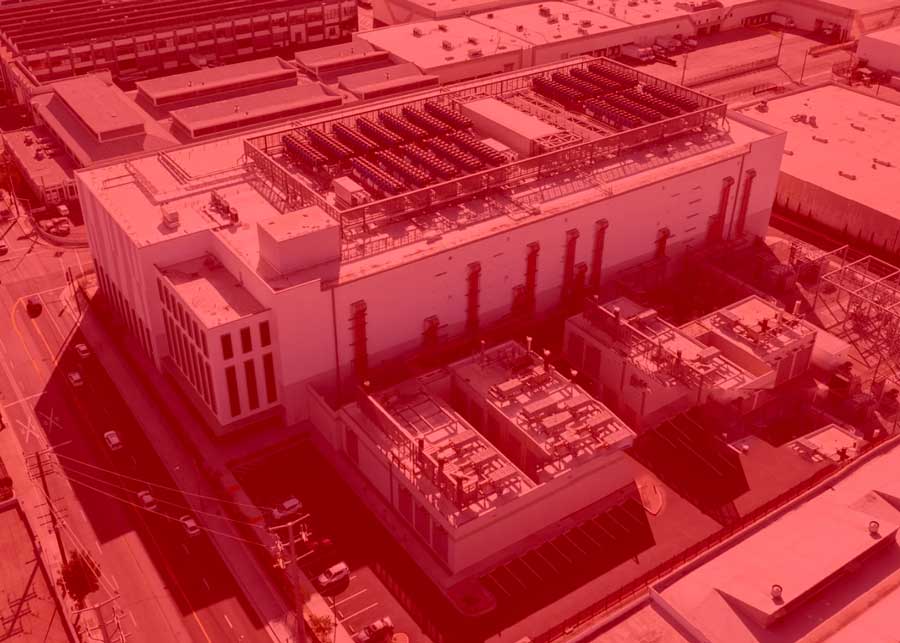
Somerset County wants to hear from residents about how data centers should be built here, and it wants to hear it before the rules become law.
The county commissioners will hold a public hearing Tuesday, Sept. 29, at 1 p.m. at the Somerset County Office Building, 300 N. Center Ave., Somerset, on a proposed Data Center Planning Ordinance. The same hearing covers new stand-alone ordinances for wind turbines, communication towers and solar facilities, plus revisions to the county’s subdivision and land development rules. The draft data center ordinance, prepared by the Somerset County Planning Commission, is written for adoption at the commissioners’ meeting on Tuesday, Oct. 6, at 10:30 a.m.
To be clear about what this is: no one has filed plans for a data center in Somerset County. The ordinance is the rulebook any future developer would have to follow. The question stopped being hypothetical in August, when The Tribune-Democrat reported that Stonebridge Hunting Ranch near Stoystown was marketing 400 acres as a potential “hyperscale” data center site, pointing to three-phase power lines, an artesian well and quick access to Route 30. County officials said at the time they had no evidence a developer was pursuing the land. Planning Commission Director Chadd Sines said the county was weighing rules on setbacks, noise, power and environmental impacts, and Commissioner Irv Kimmel Jr. said the goal was to protect residents and resources, not to ban development.
The 39-page draft does a good deal of protecting. Buildings, substations and other structures would have to sit at least 250 feet from every property line and public road, and at least 1,000 feet from any existing home not on the project parcel. The same 1,000-foot line applies to what the ordinance calls sensitive receptors: schools, day cares, hospitals, nursing homes, community centers, churches and campgrounds. Nothing could be built within 200 feet of a stream or wetland, and buildings would top out at 65 feet unless the developer wins a waiver backed by engineering studies, which the county can have checked at the developer’s expense.
Noise at the nearest residential property line could not exceed 57 decibels, averaged over 24 hours with extra weight given to evening and overnight sound. Outdoor lights would have to be fully shielded, no bluer than 3,000 Kelvin, and dimmed or put on timers overnight, with light at residential and farm boundaries held to an average of 0.2 foot-candles. That is county language for “keep the night sky dark.”
Water gets the most attention. Every data center would be required to use closed-loop cooling, which recirculates the same water, and open-loop or once-through systems would be banned outright. A project relying on wells rather than public water would need a feasibility study mapping every well and stream within 1,000 feet of the property, and the draft says no data center will be approved unless that study shows it will not harm the quantity or quality of neighbors’ wells, groundwater or streams. Any site within 150 feet of a stream would also need a forested buffer at least 100 feet wide on each side, wider on steep ground.
Power is where the draft asks the most. A developer would need written verification from the utility that the grid can carry the load without shortchanging other customers, and would have to use Tier 4 generators, the cleanest-burning class. One highlighted line, still marked in yellow in the county’s copy, would require on-site generation equal to 150 percent of the facility’s maximum load “to ensure no negative impact to the surrounding grid users.” Read literally, that means a data center would bring its own power plant, with room to spare.
Neighbors would get buffer yards that grow with the building: 100 feet along roads and near homes for a facility under 100,000 square feet, up to 300 feet for one over 250,000 square feet, planted on earthen berms with a large evergreen every 25 feet. Developers would also file an environmental and community impact analysis covering emergency services, water supply, the school district budget and municipal revenues, and submit an emergency response plan to the county and the local fire department.
The draft plans for the end, too. Before building, a developer would post a bond or letter of credit covering the full cost of tearing the facility down, with the estimate redone every 10 years. The county could place a lien on the owner’s property if the money falls short. Violations would carry fines of $1,000 per day. The application fee is $1,000.
The timing is not an accident. On Aug. 18, Gov. Josh Shapiro signed an executive order saying data center developers must win approval from the community where they want to build before the state will back their permits. A county ordinance like this one is what that local approval looks like on paper. (News & Views weighed the broader national debate in an opinion piece last week.)
The draft still has some rough edges worth a comment. Its fee schedule and sample waiver forms refer to the county’s communication tower ordinance, a sign they were borrowed from it, and at least two sections remain highlighted as unsettled.
The full draft is available at the Somerset County Planning Commission office, Suite 540 of the county office building, 814-445-1544, and on the county website at co.somerset.pa.us. Anyone may speak or hand in a written statement at Tuesday’s hearing.
No one has asked to build a data center here yet. That makes this the easiest time there will ever be to have a say in how one gets built.