The Witch of Autumn
As October wraps the Allegheny Highlands in its cozy embrace, the botanical show that has been so abundant for months now winds down. Asters have finished spreading their seeds, goldenrod has turned rusty brown, and oaks and maples shed their colors onto the forest floor. But then, in the understory, a shrub with leaves fading…
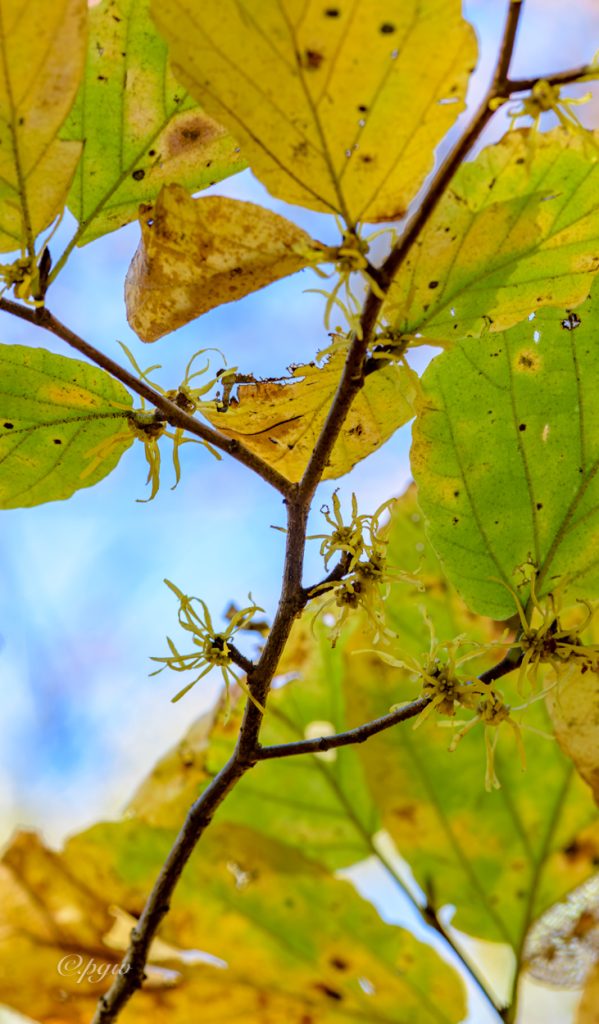
As October wraps the Allegheny Highlands in its cozy embrace, the botanical show that has been so abundant for months now winds down.
Asters have finished spreading their seeds, goldenrod has turned rusty brown, and oaks and maples shed their colors onto the forest floor. But then, in the understory, a shrub with leaves fading to yellow does something almost magical: it blooms. This is witch hazel (Hamamelis virginiana), one of Pennsylvania’s last native plants to flower.
Witch hazel flowers from October into November, sometimes even into December. Each flower has four narrow, crinkled petals that look like tiny yellow ribbons. They are clustered along the branches and twigs. When blooms are plentiful, the shrub takes on a faint yellow glow around its dark gray-brown branches.
Witch hazel is a common sight in local forests. It grows in moist woods, along stream banks, in ravines, and on rocky hillsides, and can thrive in shade where other shrubs struggle.
Through spring and summer, witch hazel surreptitiously blends into the understory, its wavy-edged, slightly lopsided leaves resembling those of other woodland plants. In fall, the leaves turn a soft yellow, and then the flowers materialize, easy to spot along your favorite trail or as you wander the woods.
Even though it sounds like something out of an evil story, the “witch” in witch hazel has nothing to do with broomsticks or spells. The most popular explanation links it to the Old English word wice, the same root as wych elm, meaning pliant or bendable. Witch hazel’s branches are famously flexible, and the name likely began as a description of the plant.
Early settlers used forked witch hazel twigs as divining rods in the practice of “water witching,” walking the land with the branch in hand to find underground water. Whether the practice gave the plant its name or borrowed it, the connection has lasted for centuries.
The name “hazel” comes from the leaves, which resemble those of the European hazel (Corylus). Even though the two plants aren’t related, the resemblance was so striking that early settlers named it after the familiar shrub they knew.
The plant’s usefulness also adds to its reputation. Indigenous peoples of eastern North America used its bark and leaves in poultices and washes, and you can still find the astringent extract distilled from its twigs in drugstores today.
So, when you’re out walking, keep an eye out for a shrub with a ghostly golden glow in the low autumn sun. It might look like a witch, but don’t worry; it’s just a botanical farewell from witch hazel, the last native plant to bloom until the wildflowers next spring.